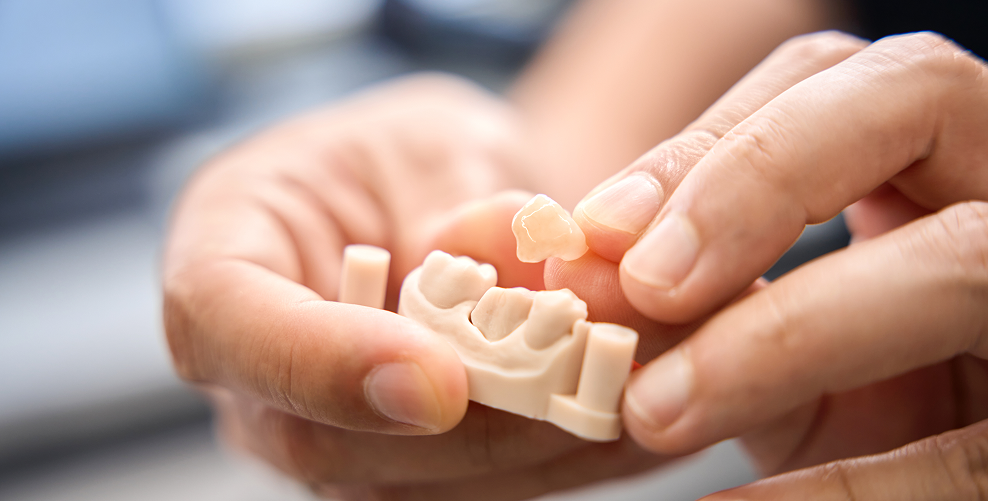
What Is a Dental Crown?
A dental crown is a type of tooth restoration designed to fit over a natural tooth. Once placed, it becomes the tooth's new outer surface above the gumline.
The purpose of a dental crown is to protect the remaining tooth structure while allowing you to bite and chew more comfortably. Crowns can also improve the appearance of teeth that are significantly discolored, misshapen, or damaged.
Depending on your needs, a crown may be made from materials such as:
Porcelain
Ceramic
Zirconia
Metal alloys
Porcelain fused to metal
Your dentist will recommend a material based on the location of the tooth, bite forces, appearance, remaining tooth structure, and other clinical factors.
How Does a Dental Crown Work?
A crown surrounds and supports the visible part of a weakened tooth. Before placement, the dentist prepares the tooth so the crown can fit securely over it.
The finished crown is shaped to match your bite and neighboring teeth. Once cemented or bonded into position, it functions as part of the tooth during everyday biting and chewing.
A crown does not replace the natural tooth underneath it. Instead, it protects the remaining tooth structure.
When Do You Need a Dental Crown?
Not every damaged tooth needs a crown. Your dentist will examine the tooth and determine whether a filling, bonding, inlay, onlay, crown, or another treatment is most appropriate.
Common reasons for getting a dental crown include:
1. A Cracked or Broken Tooth
A cracked tooth may become weaker over time, especially when chewing places additional pressure on it. A crown can help hold the remaining tooth structure together and protect it from further damage.
2. Significant Tooth Decay
When tooth decay removes too much healthy tooth structure for a filling to provide adequate support, a crown may be recommended after the decay is removed.
The crown helps restore the tooth's shape while protecting the weakened structure underneath.
3. A Large Filling
A tooth with a very large filling may have limited natural tooth structure remaining. If the tooth becomes weak or develops cracks, a crown may provide greater coverage and protection than replacing the filling alone.
4. After Root Canal Treatment
A tooth that has undergone root canal treatment may sometimes need a crown, particularly when it is a back tooth exposed to strong chewing forces.
The crown helps protect and restore the treated tooth so it can continue functioning.
5. A Severely Worn Tooth
Teeth can become worn because of grinding, clenching, bite problems, erosion, or long term use. A crown may be used when significant tooth structure has been lost and needs to be rebuilt.
6. A Misshapen or Severely Discolored Tooth
In some situations, a crown may be considered when a tooth has significant structural or cosmetic concerns that cannot be adequately corrected with more conservative treatments.
For smaller cosmetic imperfections, your dentist may recommend alternatives such as composite bonding or veneers instead.
7. To Restore a Dental Implant
A crown can also be attached to a dental implant to replace the visible portion of a missing tooth. In this situation, the crown is supported by the implant rather than a natural tooth.
Signs You May Need a Dental Crown
Only a dental examination can determine whether a crown is necessary, but some signs may indicate that a tooth needs professional evaluation.
These can include:
A cracked or fractured tooth
Pain when biting or chewing
A large or failing filling
Significant tooth decay
A tooth that has become noticeably worn
Part of a tooth breaking away
Increased sensitivity in a damaged tooth
A recently completed root canal
These symptoms do not automatically mean you need a crown. Other treatments may be more appropriate depending on the condition of the tooth.
What Is the Dental Crown Procedure?
The dental crown procedure usually involves preparing the tooth, creating a model or digital scan, and placing a custom crown.
Step 1: Examining the Tooth
Your dentist first evaluates the tooth, surrounding gums, bite, and remaining tooth structure. Dental Xrays may also be taken when needed.
Any decay or damaged material must usually be addressed before the crown is placed.
Step 2: Tooth Preparation
The tooth is reshaped so the crown can fit over it properly. If a large amount of tooth structure is missing, restorative material may first be used to rebuild part of the tooth.
Local anesthetic is typically used during tooth preparation.
Step 3: Impression or Digital Scan
Your dentist takes an impression or digital scan of the prepared tooth and surrounding teeth. This information is used to create a crown that fits your tooth and bite.
Step 4: Temporary Crown
When the permanent crown is being made by a dental laboratory, a temporary crown may be placed to protect the prepared tooth.
Temporary crowns are not as strong as permanent restorations, so patients are generally advised to avoid particularly hard or sticky foods until the final crown is placed.
Step 5: Permanent Crown Placement
Once the permanent crown is ready, your dentist checks its fit, shape, bite, and appearance.
The crown is then cemented or bonded securely over the prepared tooth.
What Is the Best Material for a Dental Crown?
There is no single crown material that is best for every patient.
The right option depends on factors such as the tooth being restored, how visible it is when you smile, bite pressure, existing dental work, and personal preferences.
Porcelain and Ceramic Crowns
Porcelain and ceramic crowns can closely resemble natural tooth enamel, making them popular for visible areas of the smile.
Zirconia Crowns
Zirconia is a strong ceramic material commonly used for both front and back teeth. It can provide a combination of durability and natural looking appearance.
Metal Crowns
Metal crowns are highly durable and can withstand significant chewing forces, although their metallic appearance makes them less commonly chosen for visible teeth.
Porcelain Fused to Metal Crowns
These crowns combine a metal base with a tooth-colored porcelain exterior. They can provide strength while offering a more natural appearance than a fully metal crown.
Your dentist can explain the advantages and limitations of each option before recommending a material.
Benefits of Dental Crowns
When appropriately recommended, dental crowns can:
Protect a weakened tooth
Restore a damaged or broken tooth
Improve chewing function
Support a tooth with a large filling
Restore the shape of a worn tooth
Cover significantly damaged or discolored teeth
Complete a dental implant restoration
The main goal is usually to preserve as much usable tooth structure as possible while restoring normal function.
Is It Painful to Get a Dental Crown?
The tooth is typically numbed with local anesthetic during crown preparation, so patients should not normally feel sharp pain while the tooth is being treated.
Some temporary sensitivity or mild gum tenderness can occur after treatment. This usually improves as the area settles.
Persistent pain, worsening sensitivity, swelling, or discomfort when biting should be evaluated by your dentist.
What Happens to Your Real Tooth When You Get a Crown?
Your natural tooth remains underneath the crown.
During the procedure, part of the tooth's outer structure is reshaped so the crown can fit properly. The crown is then placed over the remaining tooth.
Because the natural tooth is still present, good oral hygiene remains important. Decay can still develop around the edge of a crown if plaque accumulates in the area.
How Long Does a Dental Crown Last?
The lifespan of a dental crown varies from person to person.
Factors that can affect its longevity include:
A crown can last for many years, but it is not considered permanent for life. Your dentist should continue checking the crown during routine examinations.
How to Care for a Dental Crown
A crowned tooth should generally be cared for like your natural teeth.
Brush twice daily with fluoride toothpaste and clean between your teeth every day using floss or another recommended interdental cleaner.
You should also avoid habits that can damage both crowns and natural teeth, such as chewing ice, biting fingernails, or using your teeth to open packaging.
If you grind or clench your teeth, your dentist may recommend a nightguard to reduce excessive pressure on your teeth and restorations.
When Should You See a Dentist?
Schedule a dental examination if you have a cracked tooth, broken filling, persistent tooth sensitivity, pain while chewing, or visible damage to a tooth.
Early evaluation may provide more treatment options and help prevent existing damage from becoming more extensive.
If your dentist determines that the tooth needs additional protection, a dental crown may be one option for restoring its strength and function.

 (361) 232-5577