
 (361) 232-5577
Learn the difference between dental crowns and fillings, when each treatment is needed, and how dentists choose the right option to restore damaged or decayed teeth.
Dental Crown vs. Filling: Which One Do You Need?
9 Minutes Read
 By: Dr. Timothy Kuhlman
Table of content
When a tooth is damaged by decay, a crack, or an old restoration, your dentist may recommend either a dental filling or a crown. Both treatments restore teeth, but they are designed for different levels of damage.
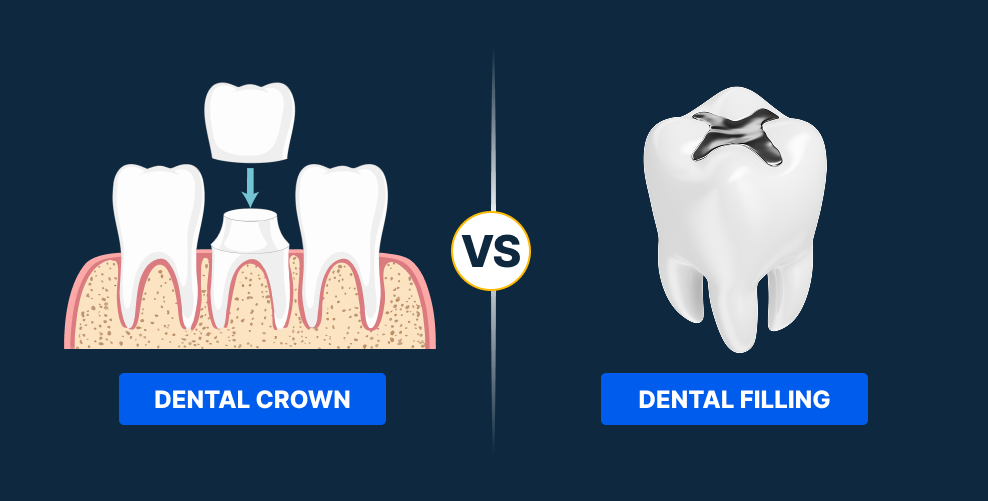
The main difference between a filling and a crown is how much of the tooth each restoration replaces or covers. A filling repairs a smaller area of damaged tooth structure, while a dental crown covers most or all of the visible portion of a prepared tooth when more extensive protection is needed.
Which treatment is appropriate depends on the size and location of the damage, how much healthy tooth structure remains, bite forces, whether the tooth is primary or permanent, and other clinical factors.
What Is Dental Filling?
A dental filling is used to repair an area of a tooth that has been affected by decay or minor damage.
The dentist removes the damaged or decayed tooth structure and fills the remaining space with a restorative material. Tooth-coloured composite is commonly used because it can be shaped and shaded to blend with the surrounding tooth.
A filling may be considered when the cavity or damaged area is relatively limited and enough healthy tooth structure remains to support the restoration.
Fillings are commonly used to restore small to moderate cavities, minor areas of tooth damage, and some worn or damaged existing restorations.
What Is a Dental Crown?
A dental crown is a tooth-shaped restoration that covers most or all of the visible portion of a prepared tooth.
Crowns are generally considered when a tooth has lost more structure than a filling can predictably restore. The crown helps protect the remaining tooth while restoring its shape and chewing surface.
A crown may be recommended for a tooth with extensive decay, a large fracture, substantial wear, a large existing filling, or significant structural weakness.
Crowns may also be used on certain teeth after root canal treatment and for restoring dental implants.
For children, crowns can be used when a primary tooth has extensive decay or damage and a filling may not provide enough coverage. Stainless steel crowns are commonly used for heavily damaged back baby teeth.
Dental Crown vs. Filling: Key Differences
The easiest way to understand crown vs. filling treatment is to compare how much of the tooth needs to be restored
| Dental Filling | Dental Crown |
|---|---|
| Repairs a specific damaged area | Covers most or all of the prepared tooth |
| Commonly used for smaller cavities | Often considered for more extensive decay or damage |
| Preserves more existing tooth structure when appropriate | Requires preparation of the tooth for full coverage |
| Usually placed directly into the tooth | Fits over the prepared tooth |
| Suitable when adequate healthy tooth structure remains | May provide additional coverage for a weakened tooth |
| Often used for minor to moderate damage | Often used when the tooth has significant structural loss |
Neither treatment is automatically better. The appropriate option depends on the condition of the individual tooth.
When a Filling May Be Recommended
A filling may be suitable when decay or damage affects a relatively small portion of the tooth and the remaining tooth structure is strong enough to support the restoration.
For example, a small cavity found during a routine dental exam may often be restored with a filling before it becomes larger.
Your dentist also considers where the cavity is located and how much pressure the tooth receives when you chew.
If a tooth has lost substantial structure, placing a very large filling may not provide the same coverage as another restorative option. In those cases, a crown may be discussed.
When a Dental Crown May Be Recommended
A dental crown may be considered when a tooth needs more extensive coverage.
This can happen when decay has removed a significant amount of tooth structure or when a tooth has been weakened by a fracture, repeated dental work, or a large existing filling.
Crowns may also be considered for selected teeth that have undergone root canal treatment, depending on the tooth's location and remaining structure.
The goal is not simply to place a larger restoration. The dentist evaluates whether the remaining tooth can support a filling or whether fuller coverage may better protect the tooth.
Crowns vs. Fillings for Cavities
The size of a cavity can influence whether a filling or crown is recommended, but size is not the only factor.
A smaller cavity may often be treated with a filling because enough healthy enamel and tooth structure remain around the damaged area.
When decay becomes more extensive, the remaining tooth may be too weak to support a conventional filling reliably. A crown may then be considered to cover and protect more of the tooth.
The dentist may also evaluate the location of the cavity, existing dental work, cracks, bite forces, and the condition of the surrounding tooth structure before recommending treatment.
Filling vs. Crown for a Cracked Tooth
A cracked tooth does not automatically require a crown.
Very small areas of damage may sometimes be managed with a conservative restoration, depending on where the crack is located and how much healthy tooth structure remains.
A more significantly weakened or fractured tooth may need a crown to provide broader coverage.
Some cracks extend too deeply for a crown alone to resolve the problem. If the dental pulp is affected, additional treatment may be needed. In other cases, a severely damaged tooth may not be restorable.
A dental examination and appropriate imaging can help determine the extent of the damage.
Filling vs. Crown for a Child's Tooth
The decision between fillings vs. crowns is also important in pediatric dentistry.
A small cavity in a baby tooth may be treated with a filling when enough healthy tooth structure remains.
When a back baby tooth has extensive decay or has become significantly weakened, a stainless steel crown may be considered instead. The crown covers the tooth and helps protect it until the primary tooth is naturally ready to fall out.
Primary teeth are important for chewing, speech development, and maintaining space for permanent teeth, so treatment decisions consider both the condition of the tooth and how long it is expected to remain in the mouth.
The appropriate restoration depends on the child's age, tooth location, amount of decay, remaining tooth structure, and individual dental needs.
What Happens During a Dental Filling?
During filling treatment, the dentist first examines the tooth and determines how much decay or damage is present.
The damaged area is removed, the tooth is prepared, and restorative material is placed into the space. The filling is then shaped to fit the tooth and adjusted so the bite feels appropriate.
Many fillings can be completed during a single dental visit, although treatment varies depending on the tooth and extent of the problem.
What Happens During Dental Crown Treatment?
Crown treatment varies depending on whether the crown is being placed on a primary tooth or a permanent tooth.
For a permanent tooth, the dentist removes damaged or decayed tooth structure and prepares the tooth so the crown can fit over it. An impression or digital scan may be used to create the final restoration.
Depending on the type of crown and treatment process, a temporary crown may be placed while the final crown is being made.
For many children's back baby teeth, a prefabricated stainless steel crown can often be selected, fitted, and placed during the treatment visit.
The dentist will explain the process based on the tooth being restored.
How Dentists Decide Between a Crown and a Filling
The difference between filling and crown treatment is not based on one rule.
Your dentist considers how much healthy tooth remains, the size and location of the cavity, whether cracks are present, previous fillings, chewing forces, the patient's age, whether the tooth is primary or permanent, and the long-term restorative needs of the tooth.
For example, two teeth with cavities of similar size may not necessarily receive the same treatment if one tooth already has a large filling or a fracture.
This is why an examination is needed before deciding between a crown and filling.
Caring for Fillings and Dental Crowns
Both crowns and fillings require good oral hygiene.
Brush twice daily with fluoride toothpaste, clean between the teeth regularly, and keep routine dental visits so your dentist can monitor the restoration and surrounding tooth structure.
Avoid using your teeth to bite very hard objects or open packages. If a crown or filling becomes loose, chipped, painful, or feels different when you bite, contact your dental office for an evaluation.
Neither crowns nor fillings make a natural tooth immune to future decay. Plaque can still collect around the edges of restorations.
Dental Crowns and Fillings in Corpus Christi, TX
Kennedy Dental Care provides restorative dental care for children, teens, and adults in Corpus Christi.
If a tooth has a cavity, fracture, or other damage, a dental examination can help determine whether a filling, crown, or another treatment may be appropriate based on the condition of the tooth.
Kennedy Dental Care serves families through its Saratoga, Alameda, Staples, and Calallen locations in Corpus Christi.
Treatment recommendations vary by patient, and the appropriate restoration depends on the tooth's condition, remaining structure, bite, age, and other clinical factors.
Not Sure Whether You Need a Filling or Crown?
A cavity or damaged tooth may need a filling, crown, or another restorative treatment depending on how much healthy tooth structure remains.
Kennedy Dental Care can evaluate the tooth and explain the treatment options that may be appropriate for your needs.
CTA Button: SCHEDULE A DENTAL EXAM
About the Author
Dr. Timothy Kuhlman specializes in orthodontics and has extensive experience in both traditional braces and clear aligners. He graduated from Ohio State University College of Dentistry and completed his orthodontic residency through the Tri-Service Orthodontic Residency Program in San Antonio. He also served 11 years in the U.S. Army, including two tours in Germany.
FAQ
Frequently Asked Questions
A filling repairs a specific damaged or decayed area of a tooth. A crown covers most or all of the visible portion of a prepared tooth and is generally considered when the tooth needs more extensive coverage.
A dentist needs to examine the tooth and consider the amount of damage, remaining healthy tooth structure, bite forces, cracks, and existing restorations before recommending treatment.
Not necessarily. A filling may be more appropriate for a smaller area of damage, while a crown may be considered when more tooth structure has been lost. The appropriate treatment depends on the individual tooth.
Some larger cavities can be restored with fillings, but if too much tooth structure has been lost, a dentist may recommend a crown or another restoration. The decision depends on the remaining strength of the tooth.
There is no single cavity size that automatically requires a crown. The dentist considers the amount and location of remaining healthy tooth structure, cracks, bite forces, and other clinical factors.
It depends on the extent and location of the crack. Minor damage may sometimes be restored conservatively, while a more weakened tooth may require a crown. Deeper cracks may require additional treatment.
Yes, in some situations. If a tooth with an existing filling becomes more extensively damaged or weakened, a crown may later be recommended.
Some children may need crowns when a baby tooth has extensive decay or damage and a filling would not provide enough coverage. Smaller cavities may still be treated with fillings when appropriate.
Crowns provide more extensive coverage of a prepared tooth, but treatment should not be chosen based only on which restoration is perceived as stronger. The amount of remaining tooth structure and clinical needs determine which option may be suitable.
The dentist considers the amount of decay or damage, remaining tooth structure, tooth location, cracks, existing dental work, bite forces, age, and whether the tooth is primary or permanent before recommending treatment.